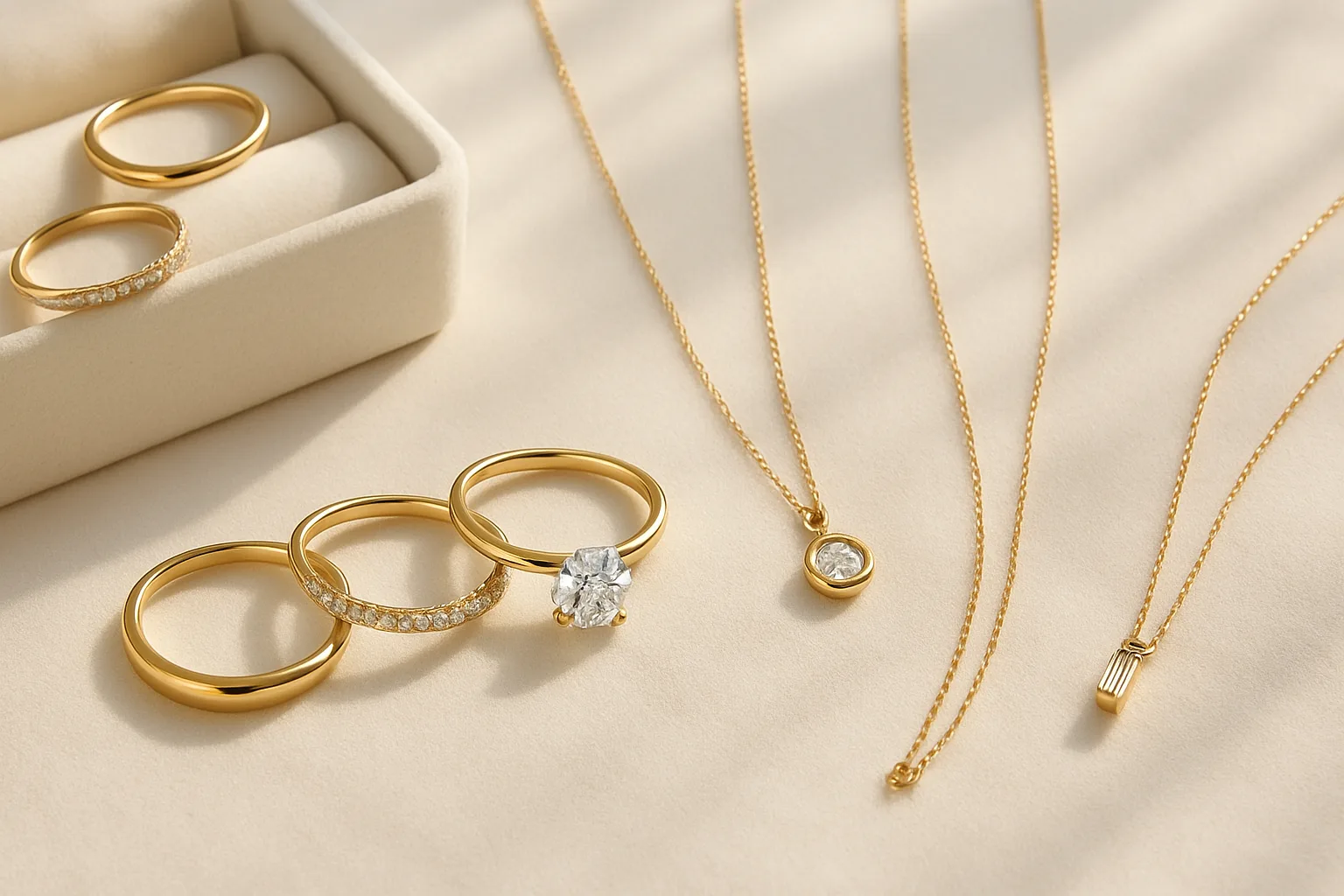
Chain style is more than a visual choice. Fine link chains often create a delicate look, while curb and cable styles have distinct shapes and a more defined presence. Box chains form compact square links, and rope chains twist together into a textured line. The names describe common constructions, though details vary between makers and individual designs.
Consider the pendant, if you plan to wear one. The chain should complement the pendant without overpowering it, and the bail must fit over the chain. A pendant with noticeable weight usually needs a chain designed to support it; an especially delicate chain may strain or break. Check that the clasp and connecting rings are secure, since they are essential parts of the whole necklace.
Think about movement and care as well. Fine chains can tangle easily and may need separate storage, while more substantial links can still snag on fabric or be damaged by pulling. Remove necklaces before strenuous activity and fasten them before storing. When selecting a chain for daily wear, balance its look with your habits and ask the maker or jeweler about suitable care for the metal and construction.
More Chain Styles and How to Choose Between Them
Beyond cable, curb, box and rope, a few other constructions turn up often in everyday fine jewelry. Figaro chains alternate several short flattened links with one longer link in a repeating rhythm. That pattern gives them a recognisable look that works on its own or with a simple charm. Snake chains are made from tightly joined plates or rings that form a smooth, flexible tube. They catch light evenly, but a sharp bend or kink can leave a permanent mark, so they are best stored flat or loosely coiled. Wheat chains, sometimes called Spiga, weave oval links into a braided pattern that feels sturdy for its width. Satellite chains add small beads at intervals along a fine chain, which gives a little sparkle without needing a pendant.
Thickness and length change how any of these styles reads. A fine chain at a short length sits close to the collarbone and stays understated. The same style in a heavier gauge, or worn longer, becomes more of a statement. If you are unsure which length suits your neckline, our guide to choosing a necklace length walks through the usual options.
Layering different chains
Mixing chain types is one of the easiest ways to layer necklaces. A smooth snake or box chain next to a textured rope or Figaro adds contrast. Varying the lengths by a few centimetres helps each piece sit in its own place. Chains with similar weights tend to tangle less with each other than a very fine chain worn beside a heavy one. Some people fasten layered chains one at a time from shortest to longest, which makes it easier to keep them in order.
Clasps and finishes
Spring ring clasps are common on delicate chains. Lobster clasps are usually easier to open and close, and they tend to feel more secure on everyday pieces. Toggle clasps are partly decorative and suit heavier links. Plated and vermeil chains need gentler handling than solid metal, because the surface layer can wear through with friction over time. For advice specific to plated gold, see our notes on caring for gold vermeil jewelry.
Whatever style you choose, look closely at the soldered joins and the jump rings near the clasp. Make sure the links lie evenly without twisting. These small details often say more about how a chain will hold up than its overall style does.