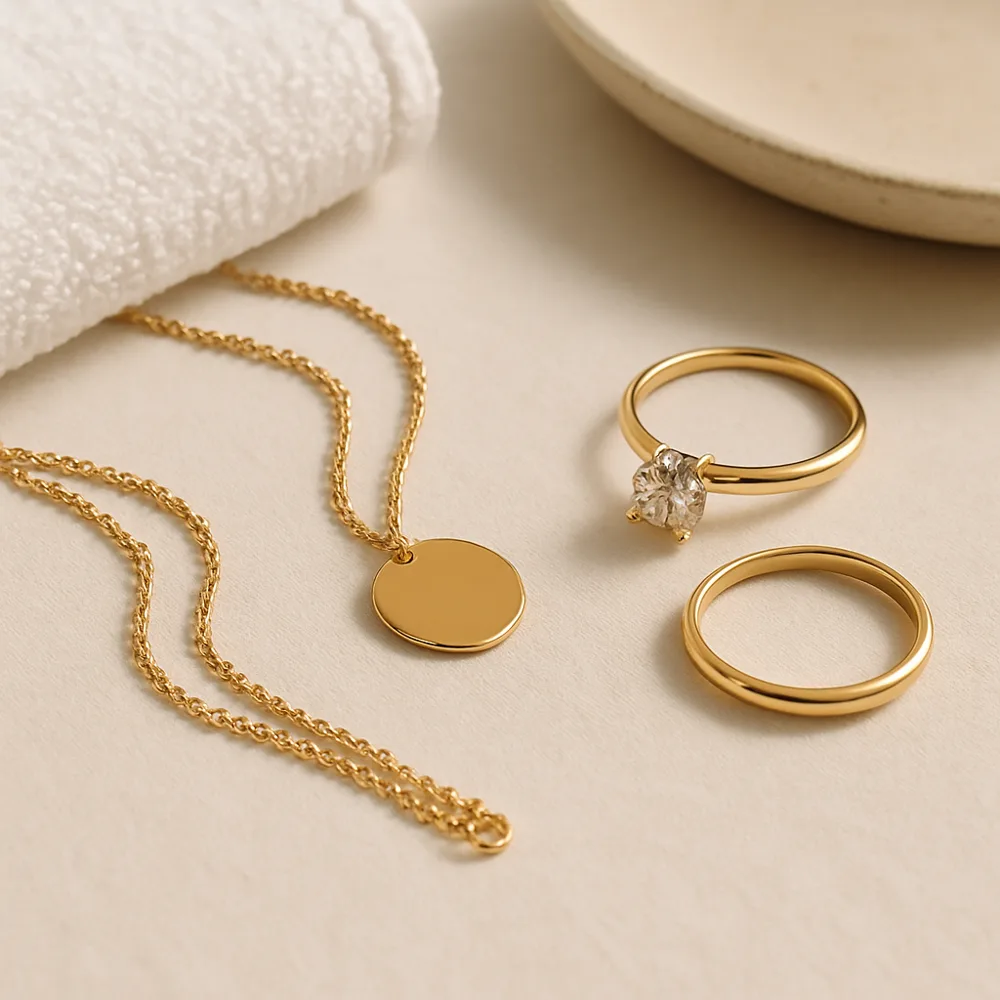
Gold vermeil is a layer of gold over sterling silver, so its surface needs considerate care. Remove vermeil jewelry before showering, swimming, exercising, or applying lotions and fragrance. Moisture, chemicals, and repeated friction can affect the finish over time. Putting jewelry on after skincare and letting products dry first helps reduce unnecessary contact.
For routine cleaning, wipe the piece with a soft, clean cloth after wearing it. If it needs more attention, use a lightly damp cloth and dry it thoroughly. Avoid abrasive polishing cloths, rough brushes, household cleaners, and soaking solutions unless the maker specifically recommends them. These can wear the gold surface or leave residue in small details.
Store vermeil pieces separately in a dry place, ideally in a soft pouch or lined compartment. Keeping them from rubbing against other jewelry helps limit scratches and wear. If the finish changes noticeably, ask a reputable jeweler about appropriate care or restoration options rather than trying a harsh home treatment. With gentle habits, vermeil can remain a useful part of a jewelry rotation, though its surface may naturally show wear over time.
Understanding Wear, Tarnish and Replating
Knowing what vermeil is made of helps explain how it ages. In many markets, including the United States, the term generally describes sterling silver coated with gold of a minimum purity and thickness. That makes it more substantial than ordinary gold plating over base metal, but the gold layer is still a surface, not solid metal throughout. Where a piece meets friction most often, such as the underside of a ring band, the clasp of a necklace or the edges of a pendant, the gold can gradually thin and the paler silver underneath may begin to show.
Why vermeil can darken
Sterling silver reacts with sulphur compounds in the air, in some foods and on skin, which causes tarnish. While the gold layer is intact it shields the silver. Once it wears thin, you may notice darker or greyish patches. This is a normal sign of age rather than a fault, and it tends to appear first on pieces worn every day. Body chemistry also varies, so two people wearing identical pieces may see very different results.
Habits that make a real difference
- Rotate pieces rather than wearing one item constantly, which spreads out friction.
- Mind your stack: vermeil rings worn beside harder metals or stones can be scratched. Our guide to ring stacking covers spacing and pairing ideas.
- Check the fit: a ring that spins or slides rubs more against skin and neighbouring rings. See how to find a comfortable ring size.
- Add an anti-tarnish strip to your storage pouch or box if you live somewhere humid.
- Take it off for manual tasks such as gardening, cleaning or lifting, where grit and pressure speed up wear.
When replating is worth considering
Because the core is sterling silver, a worn vermeil piece can often be professionally replated. A jeweller will usually clean and polish the silver before applying a fresh gold layer. This tends to suit pieces with sentimental value or a simple design; very detailed or stone-set items may need extra care, and some stones should not go through the plating process at all. Ask the jeweller what is involved, whether stones need removing, and how the new finish compares with the original before agreeing to the work.
Treating vermeil as a finish that is maintained, rather than one that lasts unchanged forever, sets realistic expectations and lets you enjoy the warmth of gold on a more accessible base metal.