It is normal for fingers to change slightly in size during the day. Warm weather, exercise, saltier meals, and extended activity may make fingers feel fuller, while cold conditions can make them feel smaller. A ring that fits perfectly at one moment may feel tighter or looser later. The aim is a comfortable average fit, not one based on an unusual temperature or activity level.
When checking fit, try the ring at a few different times and make sure it passes the knuckle without excessive force. It should stay in place during ordinary movement but still come off with a gentle twist. If you regularly experience discomfort, swelling, or difficulty removing a ring, take it off when safe to do so and consult a jeweler about fit rather than relying on a temporary workaround.
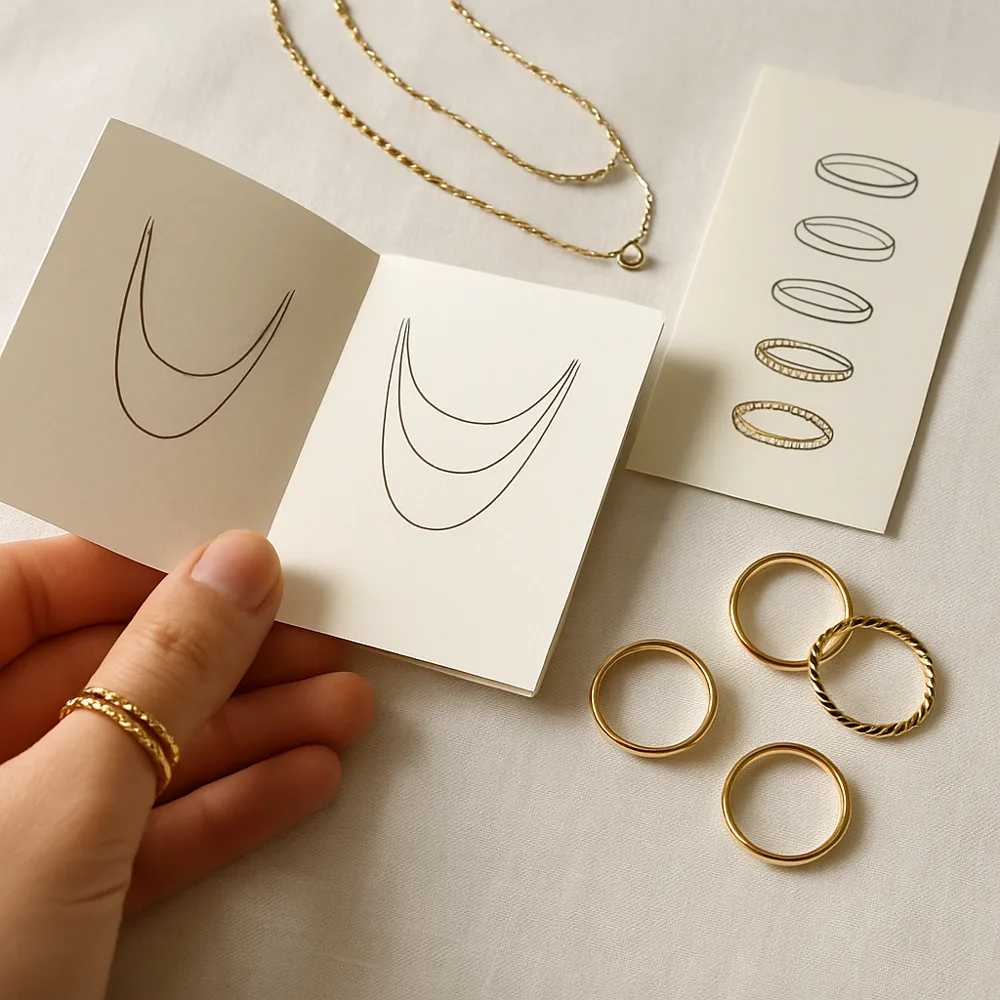
Design also affects sensation. A wide band covers more of the finger and may feel snugger than a narrow one in the same size. Stacked rings can add pressure between fingers, especially when bands are thick or have raised details. If your fit changes seasonally, consider wearing a ring on another finger during warmer periods rather than choosing a size that is consistently loose.
Practical Habits for Living With a Changing Fit
Because fingers shift through the day, a few small habits make everyday rings far more comfortable. Start with timing. Measuring first thing in the morning often gives a reading on the small side, since fingers can be slightly slimmer after a cool night. Measuring straight after a hot shower or a workout tends to run large. Late morning or early afternoon, at a normal room temperature, usually gives the most representative result. If you can, measure on two or three separate days and compare. Our guide on how to find a comfortable ring size walks through the process step by step.
Knuckles and the shape of your finger
Many people have knuckles noticeably wider than the base of the finger. A ring sized to clear the knuckle can then spin or slide around once it is on. This is one of the most common reasons a ring feels loose in the cold. A jeweler can suggest options such as a slightly squared inner profile or a comfort-fit band, which has a gently rounded interior and slides over the knuckle more easily while sitting securely.
When to take rings off
Removing rings at the right moments protects both your hands and the jewelry:
- Exercise and heavy lifting: fingers swell and bands can press into skin or be scratched against equipment.
- Long flights: cabin conditions and sitting still for hours can lead to puffiness.
- Hot baths, saunas and very warm days: heat expands the fingers, making removal harder later.
- Gardening, cleaning and DIY: knocks and chemicals can damage metal, stones and plating.
If a ring becomes stuck, cool your hand, raise it above heart level for a few minutes, and try twisting gently rather than pulling. If it will not move, or the finger is painful or changing colour, seek help from a jeweler or medical professional promptly.
Choosing rings that adapt
If your size varies a lot, narrower bands and lighter designs usually feel more forgiving than wide, heavy ones. When building a stack, mixing slim bands with one statement piece keeps pressure down; see our simple guide to ring stacking for combinations that stay comfortable from morning to evening.