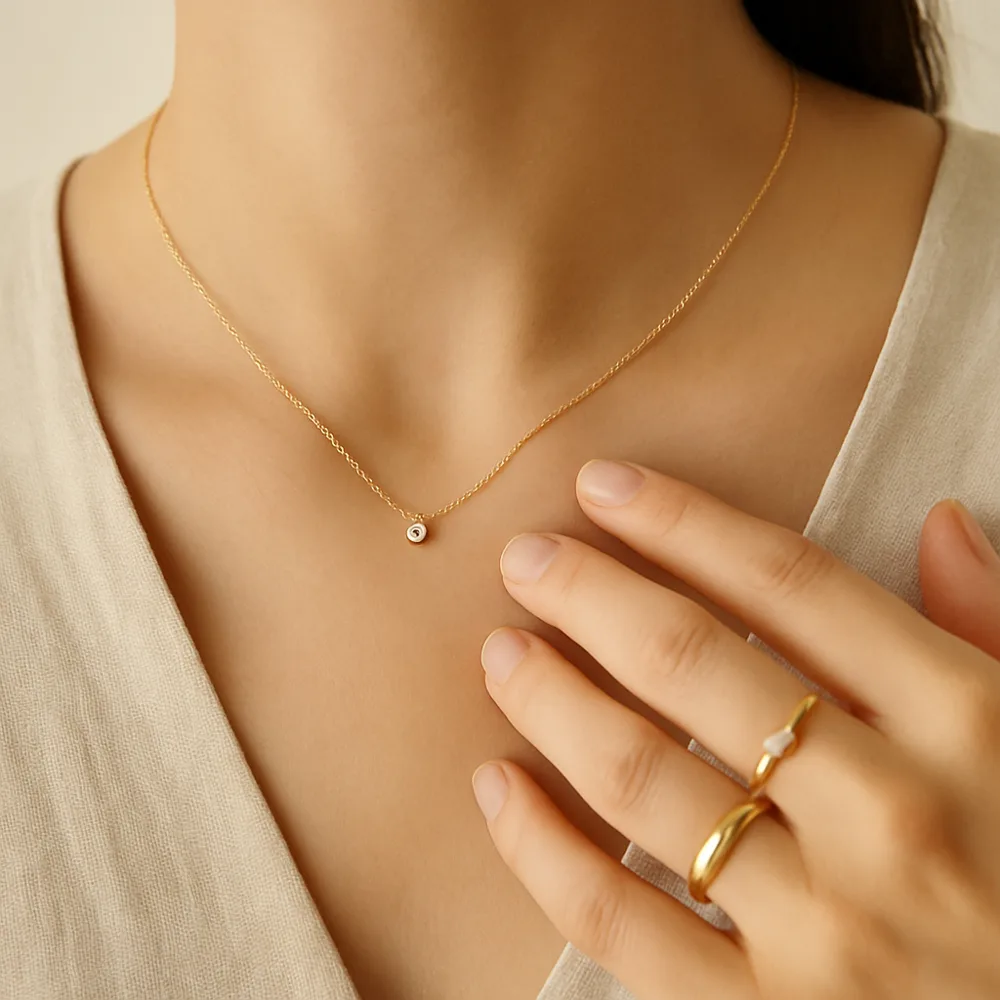
Necklace length changes how a piece frames the face and meets clothing. A short chain often follows the base of the neck, while a longer one falls lower on the chest. The same chain can sit differently on different people because neck, shoulder, and torso proportions vary. If possible, try a sample length or measure a necklace you already enjoy wearing before choosing another.
Consider the necklines you wear most. A chain that disappears beneath a high collar may be less useful than one that rests above it, while a pendant can stand out against a plain crew neck. V-neck clothing often pairs naturally with a pendant that echoes the neckline's direction. These are useful starting points, not strict rules; comfort and personal preference matter more than a formula.
For layering, use lengths with enough separation that each chain remains visible. Pendants of different sizes can help distinguish the layers, but keep the total look comfortable and suitable for your day. Check where a pendant lands when you sit, bend, or carry a bag. A thoughtful length is one that works with real movement as well as a mirror.
Common Lengths and How to Measure for Them
Necklace lengths are usually sold in a handful of familiar sizes. The names below are widely used, but where a chain actually lands depends on your build.
- Around 14 to 16 inches (choker to collar): sits close to the base of the neck. It works well with open necklines and strapless or scooped tops, but can feel snug on a fuller neck.
- Around 18 inches (princess): the most common length for everyday chains and small pendants. On many people it rests just at or below the collarbone.
- Around 20 to 24 inches (matinee): falls onto the upper chest. It is useful over crew necks and lighter knitwear, and for the middle strand of a layered set.
- Around 28 inches and longer (opera and rope): hangs well down the torso. It can be doubled for a shorter look, and long styles often suit high collars and simple dresses.
To find your own reference point, lay a piece of string or a soft tape measure around your neck. Let it fall to where you would like the chain to sit, then mark that point and measure the string flat. Remember that a pendant adds drop below the chain itself, and a heavy pendant can pull the chain into a slight V. Lightweight pieces may sit a little higher than expected.
Adjustable chains with an extender or a sliding bead give you flexibility. One necklace can move between a collarbone length and a slightly lower one depending on the outfit. This is especially handy if you are still working out which length suits you. When you buy for someone else, an adjustable or 18-inch chain is a sensible choice, because it tends to sit comfortably on a wide range of people.
Clasp position matters too. A chain that is a little long or short for your build may slowly rotate until the clasp creeps forward. Settling on the right length helps a necklace stay put. It also reduces tangling and wear on the links and clasp. Our guide to caring for gold vermeil jewelry has more on keeping finer chains in good condition. If you enjoy coordinating pieces, the same idea of balanced proportions applies to ring stacking.