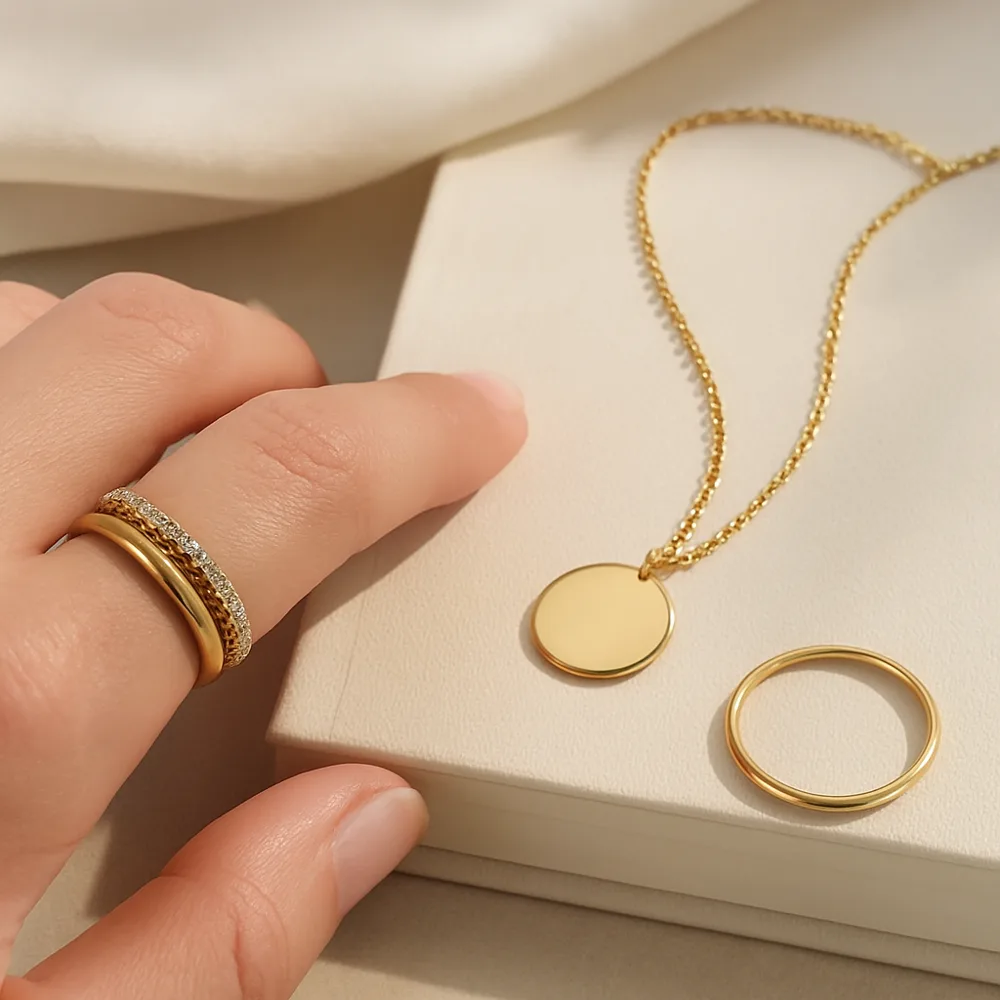
A signet ring has a clear presence, whether its face is engraved, set with a stone, or left smooth. Let it be the focal point by pairing it with simpler bands, or wear it alone for a clean look. There is no single correct finger for a signet; comfort, proportion, and personal meaning can guide your choice.
Consider the ring's scale in relation to your hands and the rest of your jewelry. A broad signet may balance nicely with a simple necklace, while a smaller face can sit comfortably beside slim bands. If you enjoy stacking, give the signet enough room so its edges do not press against another ring. Try your chosen combination through ordinary hand movements before wearing it for a full day.
Metal color can coordinate with a watch or necklace, but matching every accessory is not necessary. A signet in one metal can sit naturally alongside other finishes when the overall look feels intentional. Remove it before activities that could strike the face or catch its edges, and clean it according to its material and any stone or engraving. Its appeal often comes from personal character, not perfect polish.
Choosing the Face, Fit and Finger for Your Signet
Before thinking about pairings, it helps to understand the shapes a signet face can take. Oval faces feel classic and soften the look of a broad ring, while round faces read as compact and modern. Cushion and rectangular faces have a more architectural presence and tend to suit longer fingers or wider hands. If you are unsure, hold the ring flat against your finger and look at it from a normal distance, not up close. The face should feel in proportion to the width of your finger rather than spilling over its edges.
Fit matters more with a signet than with a slim band. The weight sits on top, so a ring that is slightly loose will often spin and leave the face turned towards your palm. A snug but comfortable fit keeps it upright. Fingers swell in warm weather and shrink in the cold, so check the size at different times of day. Our guide to finding a comfortable ring size covers this in more detail. Some people choose a fractionally tighter size for a heavy signet and accept that it needs a gentle twist over the knuckle.
Traditions and finger choices
Historically, signet rings were used to press a seal into wax, which is why many were worn on the little finger of the dominant or non-dominant hand, where they were easy to use and less likely to knock against things. The little finger remains a popular choice because it lets the ring stand apart from any wedding or engagement band. Wearing a signet on the index finger gives a bolder, more noticeable look, while the middle finger places it at the centre of the hand for a balanced effect.
Engraving ideas
If you plan to personalise the face, think about legibility at small scale. Single initials or a simple monogram usually read more clearly than full names. Symbols, a meaningful date on the inside of the shank, or a small motif can add character without crowding the surface. Deep engraving tends to wear more gracefully over time, while very fine lines may soften with years of use.
When mixing a signet into a larger set, the principles in our ring stacking guide apply: vary the widths, leave breathing room, and let one piece lead.