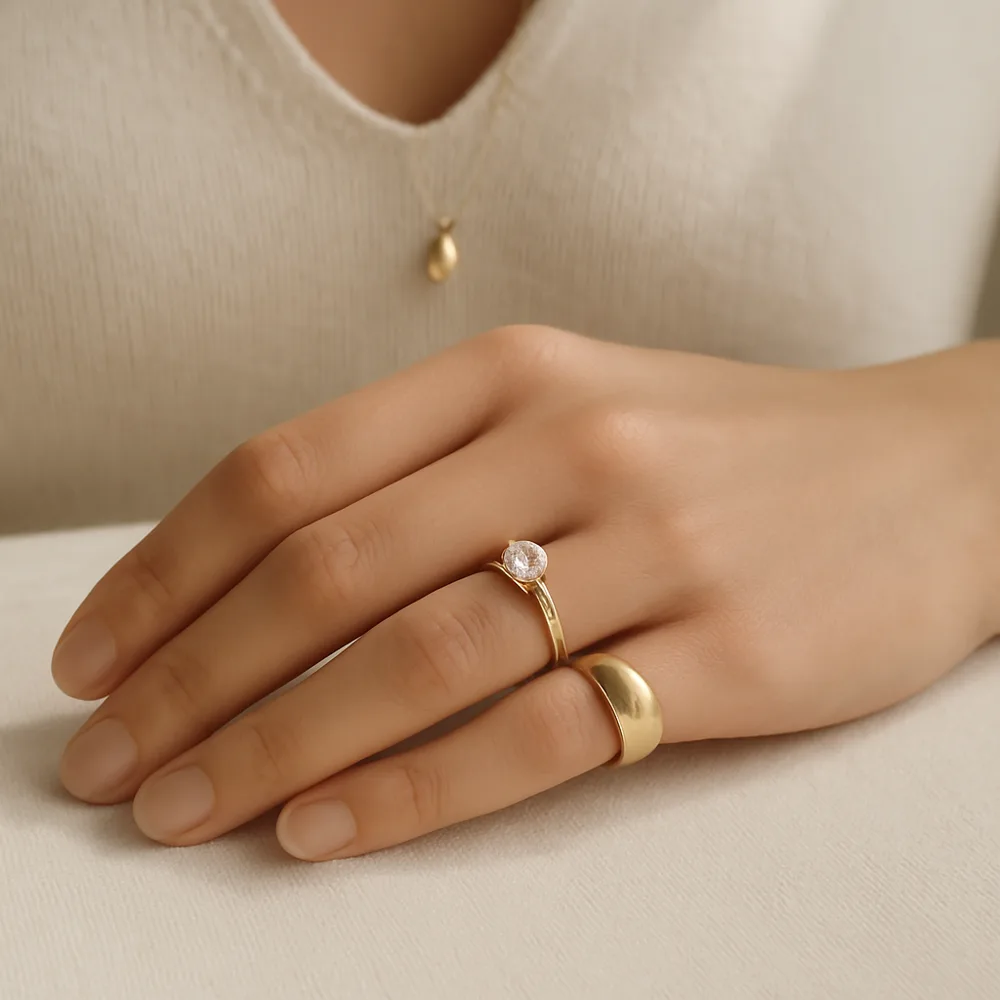
Ring stacking works best when each piece has room to be seen and worn. Start with one ring that anchors the look, such as a simple band or a favorite gemstone ring. Add one or two slimmer designs nearby, checking that their shapes sit comfortably together. A stack does not need to cover every finger to feel complete; a small, balanced grouping can be more practical for daily wear.
Varying texture or profile creates interest without relying on dramatic contrast. A smooth band can sit beside a twisted or beaded ring, while a low-profile stone offers a focal point. If several rings have tall settings, they may catch on clothing or press against neighboring fingers. Try the combination at home and move your hands naturally before deciding it works for regular wear.
Metal colors can match for a calm, unified look or mix for a more relaxed feel. Repeating one detail, such as a shared finish or similar band width, helps connect different pieces. Check the rings for rubbing, especially when a hard stone touches a softer metal band. Rotate the stack occasionally, and remove pieces before strenuous tasks that could bend, scratch, or snag them.
Sizing, Spacing and Building a Stack Over Time
A stack that looks right in the mirror can still feel wrong after a few hours, and fit is usually the reason. Several rings worn together on one finger take up more space than a single band, so many people find they need a slightly larger size for the finger carrying the stack, especially if the bands are wide. Fingers also swell in warm weather and after exercise, then shrink in the cold. Try your combination at different times of day before you commit to it. If you are unsure of your measurements, our guide on how to find a comfortable ring size explains what to check.
Using the whole hand
Stacking doesn't have to mean piling everything onto one finger. Spreading rings across two or three fingers keeps each finger comfortable and lets individual pieces stand out. A common arrangement puts the anchor ring on the ring or middle finger, a thin band on the index finger, and a delicate midi or pinky ring to balance the hand. Leave at least one finger bare so the hand has some breathing room. This also makes it easier to wear the stack through the day while typing, cooking or carrying bags.
Thinking about proportion
Slim bands around 1–2 mm wide tend to suit narrow fingers and layer easily. Wider bands work well as a single statement and need fewer companions. Curved or contoured bands are made to hug a stone setting, which helps when you want a band flush against an engagement ring or a solitaire. Without that curve, a straight band will often leave a small gap.
Growing a stack gradually
Many of the most personal stacks are collected slowly. Each ring might mark a birthday, a milestone or a trip. Adding one piece at a time lets you see how each new ring changes the balance. It also helps you avoid buying pieces that compete with each other. Keep a rough plan in mind, such as staying with one metal or one stone colour, so later additions fit in naturally.
Storing stacked rings
Rings worn together often rub against each other in a drawer as well. Store them separately or in a lined compartment so stones can't scratch softer metals. Plated pieces need extra care to keep their finish, and you'll find practical tips in our notes on caring for gold vermeil jewellery.