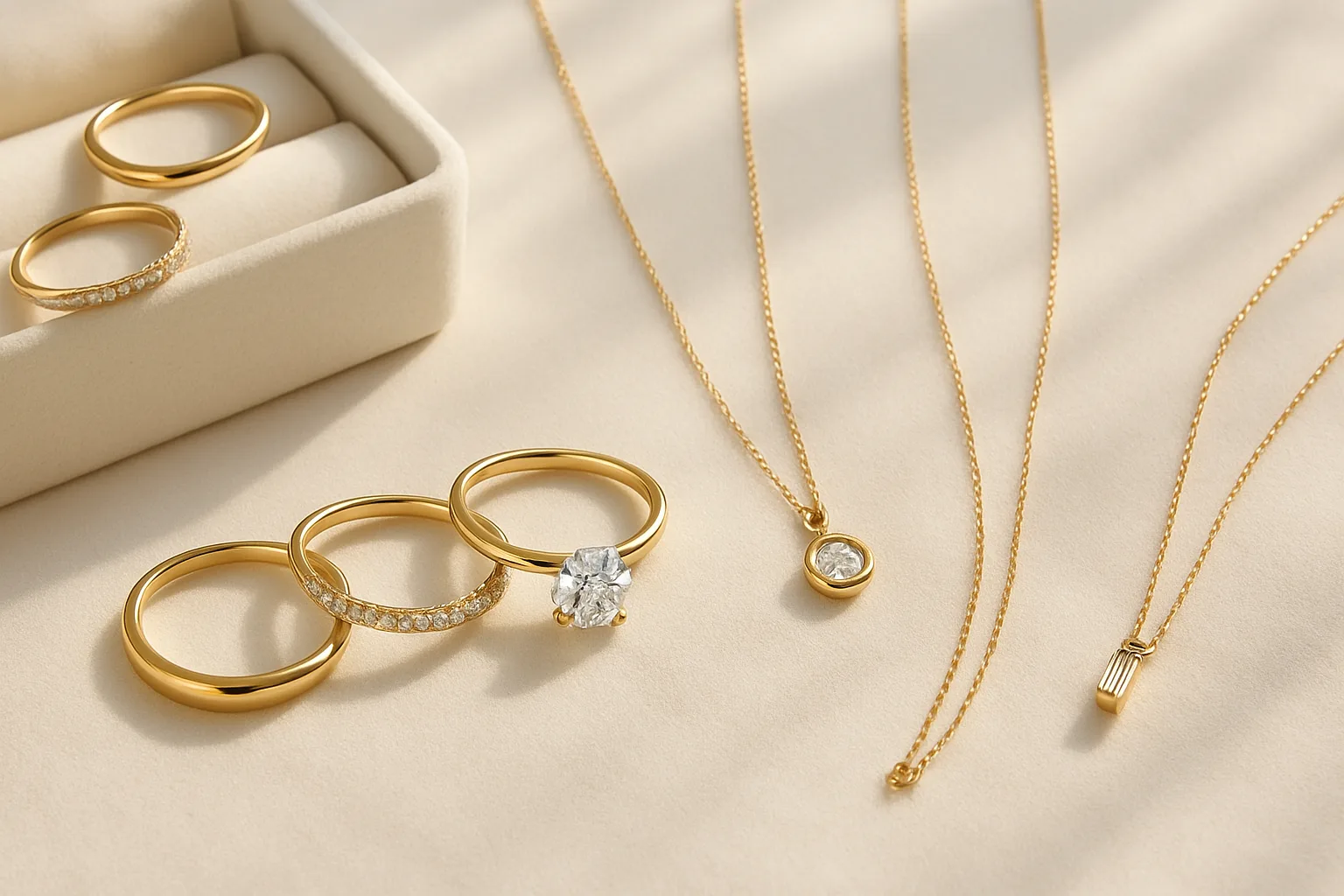
Necklace layers tangle when chains are similar in length, weight, or movement. Begin with lengths that create visible separation, then check how they fall when you turn your head and move your shoulders. A short chain with a longer pendant necklace often stays clearer than two fine chains resting at nearly the same point. Adjust the combination until each piece has its own space.
Different chain styles and pendant weights can reduce overlap. A slightly heavier chain may move less, while a small pendant can help a fine chain hang straight. Keep delicate pieces away from chunky links that could snag them. If you often layer the same necklaces, a purpose-made multi-strand clasp may help organize the ends, though it will not prevent every twist.
Put necklaces on one at a time and fasten each clasp before adding the next. When removing them, separate and close each chain before storage rather than placing the group together in a dish. Store fine chains flat or hanging individually. If a knot forms, work slowly on a clean surface with good light; pulling hard can tighten the tangle or strain a delicate link.
Planning a Layered Look That Stays Put
Most tangling problems are settled before the necklaces ever go on. A little planning at the mirror, and a few small habits through the day, make a layered look far easier to wear for hours at a time.
Space the lengths deliberately
A useful starting point is to leave roughly five centimetres, or about two inches, between each layer. A common trio is a short chain near the collarbone, a middle chain a little lower, and a longer piece or pendant that sits on the breastbone or below. If you are unsure where standard lengths fall on your own neckline, our guide to choosing a necklace length explains how each one tends to sit. A short extender chain can also help. Adding a little length to one necklace is often enough to separate two pieces that keep meeting.
Mix textures with purpose
Chains with different structures behave differently against each other. A flat snake or herringbone chain lies smoothly and tends to resist twisting. Cable and rope chains are flexible and grip one another more easily. Pairing one smooth, structured chain with one flexible chain usually gives better results than layering two of the same type. Try to keep the overall look balanced as well. Two or three pieces are often easier to manage than five, especially with very fine chains.
Think about your neckline and activity
Clothing affects how chains move. Knitwear and textured fabrics can catch fine links and drag them together. Smooth fabrics let necklaces slide more freely, and so do open necklines. If your day involves a lot of movement, such as commuting, lifting a bag strap or wearing a scarf, consider fewer layers or slightly heavier chains. Bag straps and seatbelts are frequent culprits because they press chains together and twist them.
Check in during the day
Glance at your layers now and then, particularly after taking off a coat. Small twists are easy to undo early but can tighten into knots over time. Rotate each clasp back to the nape of your neck as you do this, because a clasp that slides forward often pulls its chain into the next one.
Care for the pieces you layer most
Chains that rub against each other daily can show wear on plated or vermeil surfaces sooner than pieces worn alone. Wiping them gently after wear and storing them separately helps preserve the finish. You can read more in our notes on caring for gold vermeil jewelry.