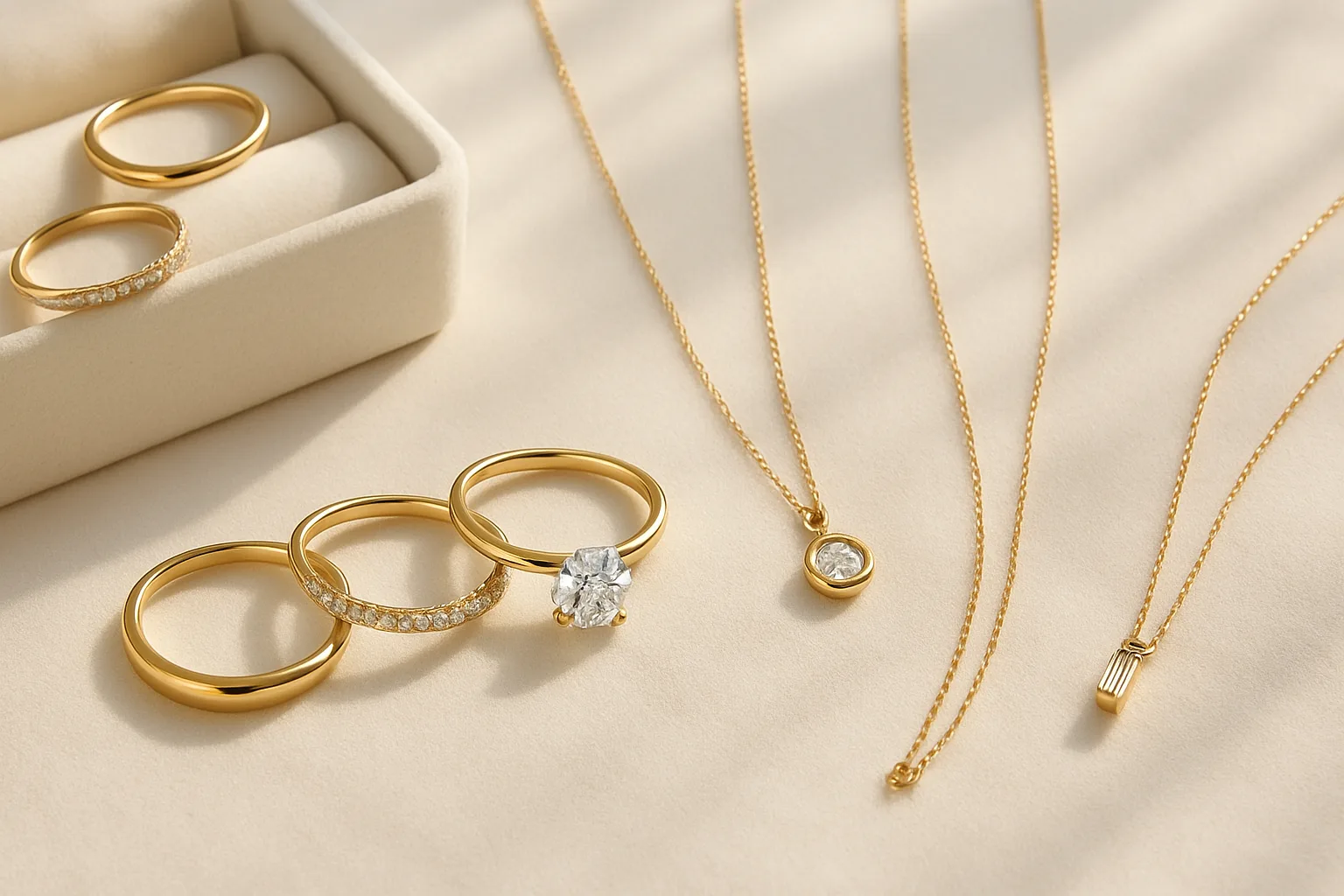
An everyday ring should suit both your style and the way you use your hands. Notice whether you prefer a light band that feels almost unnoticeable or a more substantial design with a visible presence. A low-profile setting may be less likely to catch on fabric, while a tall stone can make a striking focal point but require more care during daily activities.
Comfort depends on more than the ring size. Band width, inner shape, edge finish, and neighboring rings all affect how a ring feels. Try it on while making a fist and moving your fingers naturally. If you plan to stack it, check for pressure between bands. A piece that feels good for a brief fitting may feel different after hours of wear, so consider your typical routine.
Think about maintenance before settling on a design. Some stones and finishes need more attentive care, and intricate settings can collect residue. Ask the maker or jeweler how to clean and inspect the specific piece. Remove the ring for tasks likely to cause impact, abrasion, or chemical exposure. Choosing thoughtfully lets an everyday ring become a familiar favorite rather than an item you need to protect constantly.
Metals, Stones and Finishes That Hold Up to Daily Life
Once you know the shape and feel you want, the materials decide how well a ring copes with years of ordinary use. Metals behave differently under daily wear, so it helps to match the metal to your habits rather than choosing on colour alone.
Choosing a metal
- Solid gold is a dependable everyday choice. Lower karats such as 14k contain more alloy metals, which makes them harder and more resistant to scratches and bending than softer 18k or 22k gold.
- Platinum is dense and durable. It develops a soft patina over time instead of losing material, and many people like that lived-in look.
- Sterling silver is affordable and attractive but softer. It tarnishes with exposure to air and moisture, so it needs regular polishing.
- Plated and vermeil pieces have a thin layer of gold over another metal. Rings rub against surfaces constantly, so the coating on the palm side can wear through sooner than it would on a necklace or earrings. If you love vermeil, our guide to caring for gold vermeil jewelry explains how to make it last longer.
Stones for constant wear
Gemstone hardness matters most on hands, which knock against desks, doors and bags many times a day. Diamonds, sapphires and rubies are among the hardest gems and suit daily wear well. Softer or more delicate stones such as opal, pearl, emerald and turquoise can chip, scratch or absorb oils more easily. They can still be worn often, but a protective setting, such as a bezel that wraps the edge of the stone, gives them a better chance.
Finish and texture
A high-polish surface shows fine scratches quickly. Brushed, matte or hammered finishes hide everyday marks better, although they may slowly shine up where they rub most. Engraved patterns and milgrain edges add character but collect more dirt, so they need a gentle brush now and then.
Planning ahead
Fingers can swell in heat and shrink in the cold, so a ring that fits well across the seasons is worth the extra effort. Our notes on finding a comfortable ring size cover this in more detail. If you might wear it with other bands later, the ring stacking guide can help you choose widths and profiles that sit well together.