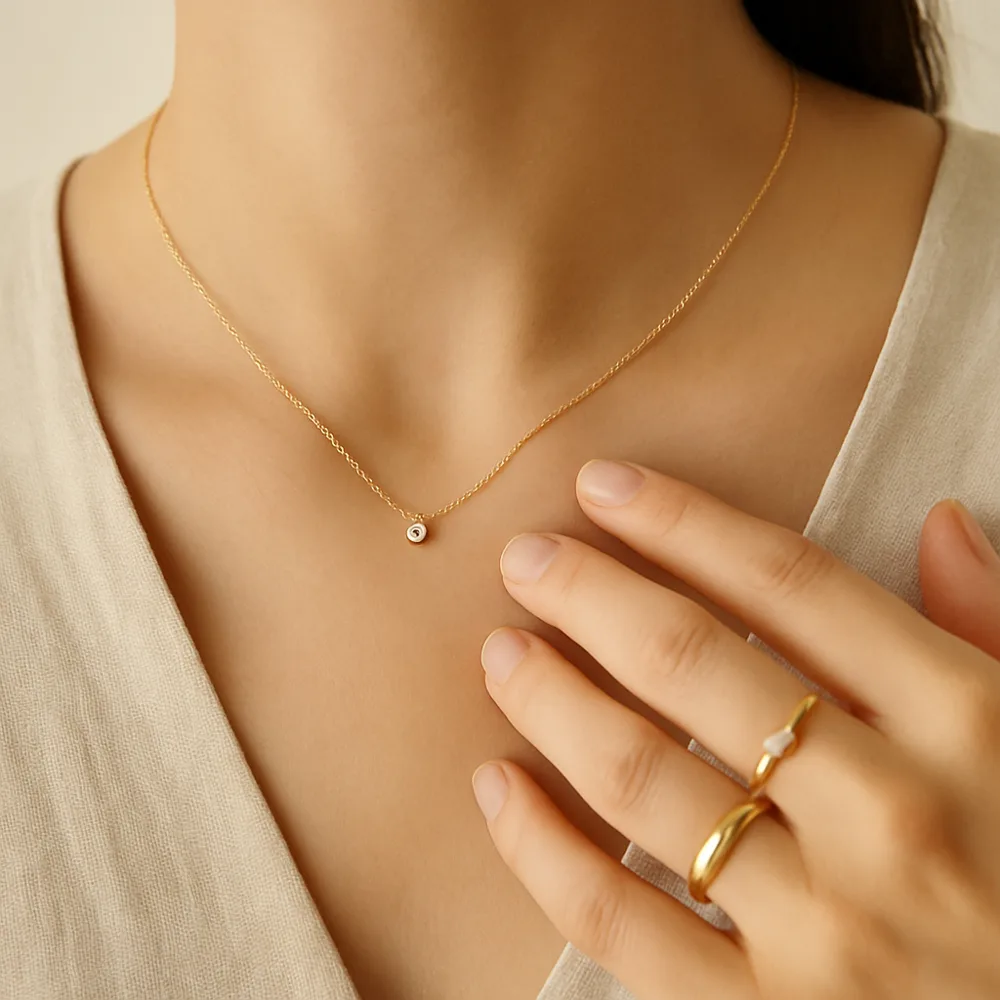
A birthstone can connect a piece to a birthday, family member, or personal milestone, but you do not need to choose it only for tradition. Color, cut, and the way a stone looks in a particular setting may matter just as much. Try to view the stone in different light when possible, since its appearance can shift between indoor and outdoor conditions.
Ask about the stone's identity, any treatments, and the care it needs. Stones that look similar may differ in durability or sensitivity, so a birthstone ring intended for daily wear deserves particular attention. The setting matters too: a low-profile design may be less likely to catch on clothing than a raised one. Your jeweler can explain whether the stone and construction suit your routine.
Choose a metal and design that you will enjoy beyond a single occasion. A small stone in a simple pendant can be easy to layer, while a larger gem may make a memorable focal point. Clean the piece according to its specific materials, and store it separately from harder gemstones. Meaningful jewelry becomes most rewarding when it is both personal and comfortable to wear.
Matching Birthstones to Everyday Wear
Birthstones vary widely in how well they handle daily life, so it helps to know a little about each stone's general character before deciding between a ring, a pendant or a pair of earrings. Hardness is usually described on the Mohs scale, which measures resistance to scratching. Diamond (April) sits at the top, while sapphire (September) and ruby (July) are both forms of corundum and are very hard-wearing. These stones are popular choices for rings that will be worn every day.
Some birthstones need a gentler approach. Pearl (June) and opal (October) are comparatively soft and can be sensitive to chemicals, heat or sudden changes in temperature. Emerald (May) is reasonably hard but often contains natural inclusions and is commonly treated with oils or resins, which can make it more vulnerable to knocks and to ultrasonic cleaning. Turquoise (December) is porous and may absorb lotions or perfume over time. For these stones, a pendant or earrings usually face less wear than a ring, and a protective bezel setting can add security if you do prefer a ring.
Practical ways to personalise
- Family pieces: several small stones representing children or grandchildren can sit together on a bar pendant or a band. Keeping the stones similar in size helps the design look balanced.
- Accent rather than centre: a tiny birthstone set into the side of a ring or on a charm adds meaning without exposing a delicate gem to constant contact.
- Alternative stones: many months have more than one traditional or modern birthstone, so you can often choose the colour or durability that suits you best.
- Lab-grown options: laboratory-created stones share the chemical composition of their natural counterparts and can be a sensible choice for a budget or for a piece you expect to wear hard.
Pairing stone and metal
Warm-toned stones such as citrine or garnet often look rich against yellow gold, while cooler blues and purples like aquamarine, sapphire and amethyst can appear especially crisp in white metals. These are tendencies rather than rules, so try a few combinations against your skin. If you plan to wear the piece alongside others, our guides to ring stacking and choosing a necklace length can help it fit naturally into your collection. For plated pieces, see our notes on caring for gold vermeil, since both the metal and the stone will need gentle handling.