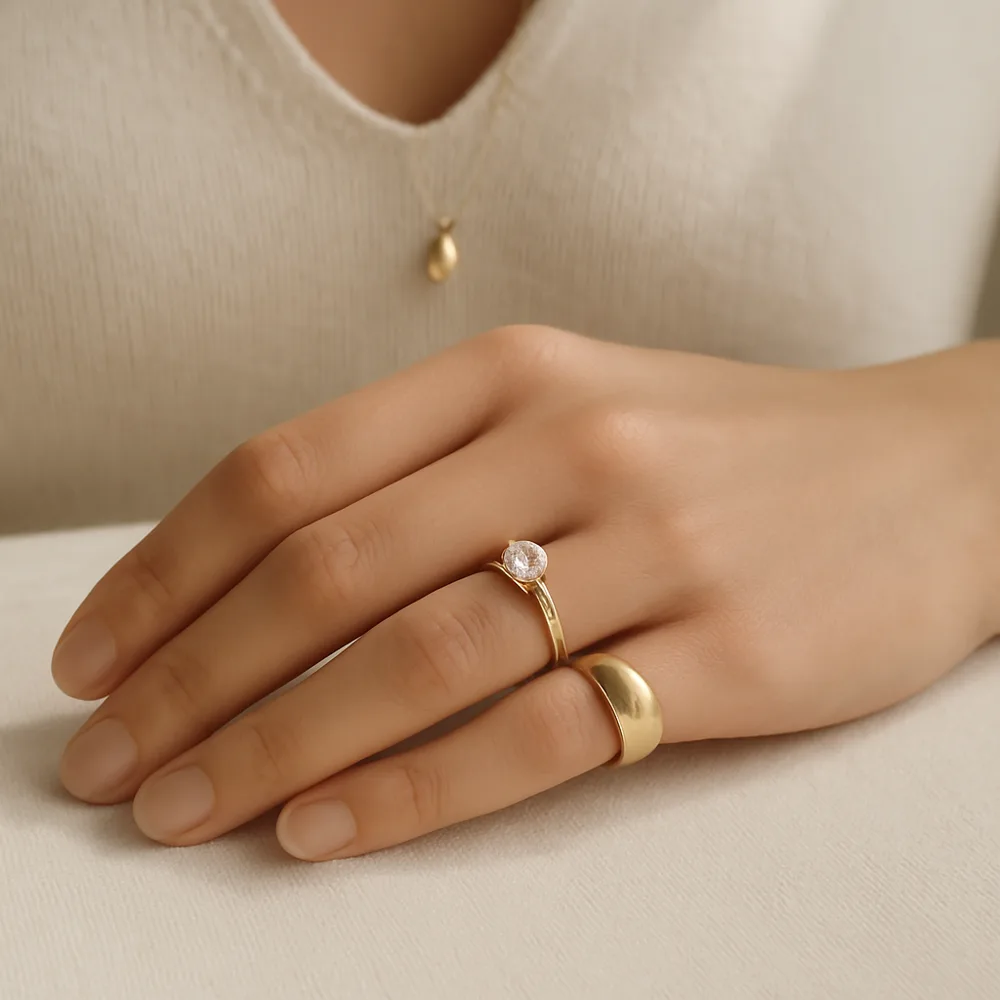
A pendant can anchor a layered necklace combination by giving the eye a clear point of focus. Start with the pendant chain, then add a shorter or longer chain with less visual weight. The difference in length helps prevent the pieces from sitting on top of one another. Consider the pendant's shape and how it hangs before choosing the surrounding chains.
Balance the overall look with variation that feels related. A plain chain beside a detailed charm keeps the pendant noticeable, while a small accent pendant can add interest without competing. Similar metal tones create a unified effect, though a mixed-metal layer can work if the proportions feel intentional. Pay attention to chain thickness and pendant weight so that each component remains secure and comfortable.
Try the layers with the clothing you expect to wear and move around in them. A pendant should not catch on a collar or swing into the way of a bag strap. Remove the necklaces one at a time and store them separately after wear to avoid tangles. With a little spacing and a clear focal point, a favorite pendant can feel fresh without needing a complicated arrangement.
Spacing, Clasps and Proportion: Fine-Tuning the Focal Layer
Once you have chosen the pendant that will lead the arrangement, the details of spacing decide whether the combination looks deliberate or crowded. A useful starting point is a gap of roughly two inches between each chain. Common lengths such as 16, 18 and 20 inches create that rhythm naturally, though the way a chain sits also depends on your neckline and build. Our guide to choosing a necklace length explains where each standard length tends to fall, which makes it easier to decide whether the pendant belongs in the middle or at the bottom of the stack.
Where to place the pendant
Placing the pendant on the longest chain lets it drop below the other layers and frame the collarbone without obstruction. This suits larger or textured pendants. A small, delicate pendant often works better in the middle position, with a fine chain above and a slightly heavier one below to hold it in place visually. Avoid putting two pendants at nearly the same length, because they will knock against each other and blur the focus.
Choosing supporting chains
- Cable and trace chains are understated and let a pendant stand out.
- Box or rope chains have more presence and suit a simple, solid pendant.
- Paperclip or satellite chains add texture but can compete with an ornate charm, so pair them with cleaner shapes.
Keep the supporting chains slightly finer than the pendant chain, or at least no heavier, so the focal piece still carries the most visual weight.
Practical touches
Chains tend to rotate towards one another during the day, mainly because clasps slip round to the front. Fastening each necklace and turning the clasp to the back before adding the next one helps, and some people use a multi-strand connector to keep the layers separated. Check jump rings and bails regularly, since a heavier pendant puts steady strain on these small parts.
Plated and vermeil pieces in a layered set rub against each other, which can wear the surface over time. Taking them off before showering, exercising or applying perfume extends their life, and our notes on caring for gold vermeil jewelry cover cleaning and storage in more detail. With a little attention to these finishing points, one well-chosen pendant can carry an everyday layered look for years.