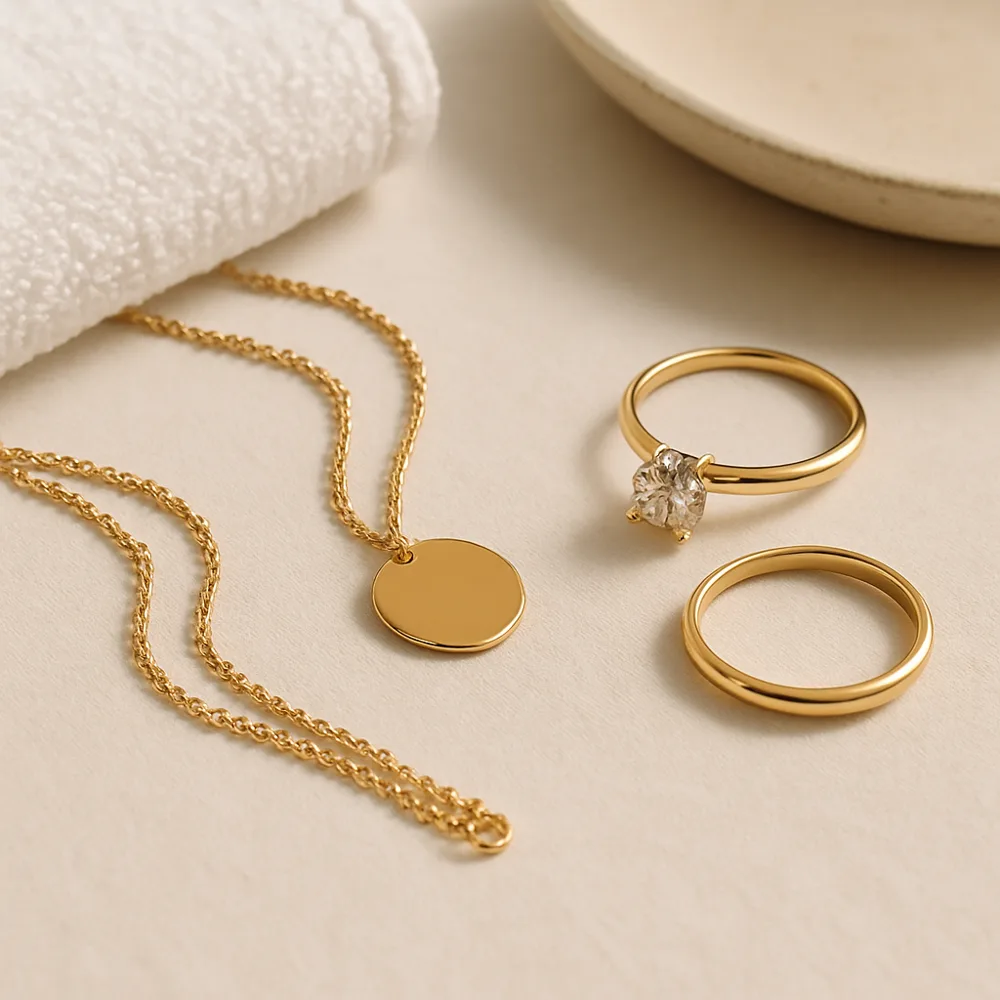
Wearing different metal colors together can make a jewelry combination feel relaxed and individual. You might pair a warm gold necklace with a silver band, or combine two finishes in a stack. There is no requirement to match every piece. If you are unsure where to begin, mix two metals first and notice how the combination looks with your clothing and other accessories.
A repeated detail can help connect different pieces. Similar shapes, shared textures, or a two-tone item can act as a visual bridge. You can also vary the amount of each metal, letting one color lead and using the other as a small accent. These approaches create balance without turning the look into a strict formula.
Comfort and material compatibility still matter. Rings worn side by side may rub together, and different finishes can show wear at different rates. Store pieces separately and check them periodically for scratches or changes. If combining jewelry brings you pleasure, that is a good reason to wear it. A personal mix often feels more natural than a perfectly matched set.
Putting Mixed Metals into Practice
Once you are comfortable pairing two metals, it helps to think about where each piece sits on the body. Jewelry that is close together, such as rings on one hand or layered chains at the neckline, is seen as a single group, so the mix reads clearly. Pieces that are further apart, like a gold pendant and silver earrings, feel more like separate choices. Both work, but grouping mixed metals in one area usually looks more intentional.
Start with the pieces you wear most
Your everyday staples are a natural anchor. A wedding band, a watch or a favourite chain often sets the tone, and other pieces can be chosen to complement it. If your band is yellow gold, a slim silver or white gold ring beside it adds contrast without competing. When building a stack, our guide to ring stacking covers spacing and proportion, which matter just as much as colour.
Consider tone and finish together
Metals vary within their own families. Yellow gold can look pale or deep, rose gold ranges from soft pink to coppery, and silver can be bright and polished or darkened and oxidised. Matching finishes, for example all high-polish or all brushed, can tie different colours together. Equally, mixing a matte piece with a shiny one adds depth even when the colours are similar.
Layering necklaces in mixed metals
With necklaces, varied lengths keep chains from tangling and give each metal its own space. A shorter silver chain above a longer gold pendant creates a clear, readable line. If you are unsure how lengths fall, see our notes on choosing a necklace length.
Caring for a mixed collection
- Separate harder and softer metals in storage, since harder pieces can scratch softer ones.
- Clean each piece by type. Silver polishing cloths and cleaners are not always suitable for plated or vermeil items, which have a thin gold layer that can wear away.
- Remove jewelry before swimming, cleaning or applying lotions to slow tarnish and wear.
Plated and vermeil pieces need particular gentleness; our page on caring for gold vermeil jewelry explains the basics. Looked after well, a mixed collection gives you more combinations from fewer pieces, and lets your jewelry grow with your style over time.